Combining my interests in death, and walking in the worlds of the dead, I bring you some Dreadful Visitations.
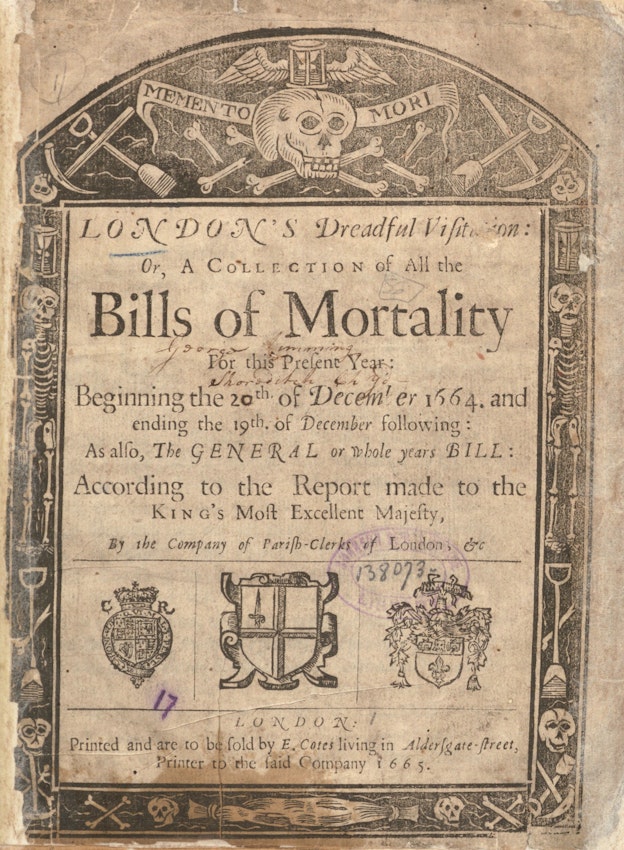
Below is the rather gorgeous front page of the Bills of Mortality from 1664-1665 in London, during the plague. Plagues are a bit topical nowadays and we can learn from how they have been handled in the past. We forget that the plagues of Europe killed a large proportion of the population and changed the demographic and economic landscapes for ever. And they went for centuries.
In London, they tried to count the dead and work out what they had died from. This was a first attempt at statistics keeping, demographics, and epidemiology. We know about it from contemporary accounts by wealthy and literate men such as diarist Samuel Pepys, and the person in charge of it, John Graunt who is considered to be the 'father' of statistics. Daniel Defoe, in his excellent book Journal of the Plague Year, critiques the statistics keeping of the time; he wrote a generation later and his book is a fictionalized account, but illuminating nevertheless.
So much for the wealthy and literate men. I am much more interested in the people who did the work on the ground. They were called Searchers of the Dead, or just Searchers, and they were women and they were poor. In once place they are described as 'ancient sober woemen' (sic). They were often ex midwives or carers for the sick, who were driven to change their employment as the circumstances changed around them. They were paid per body, which meant their incomes varied a lot. They had no training. They were subject to strict rules: they were not allowed to take up other employment, they had to live away from other people (usually they lived together), and they had to carry a white wand to indicate the nature of their work. A form of social distancing. Their lives were often short, due to their older age and the fact that they often died of the diseases they found.
We know the names of some of them. Mary Oswell and Elizabeth Scott of the Stepney parish took up the roles in 1625. Within two years both were dead. Goodwife Pattison worked for St. Antholin, Budge Row, from 1590-91 to 1597-98, alongside others like Mother Bamford, Goodwife Tailor, Goodwife Atkinson, and Goodwife Hubble. Goodwife, or Goody, was a title of respect used for working class women at the time. I am glad we know their names.
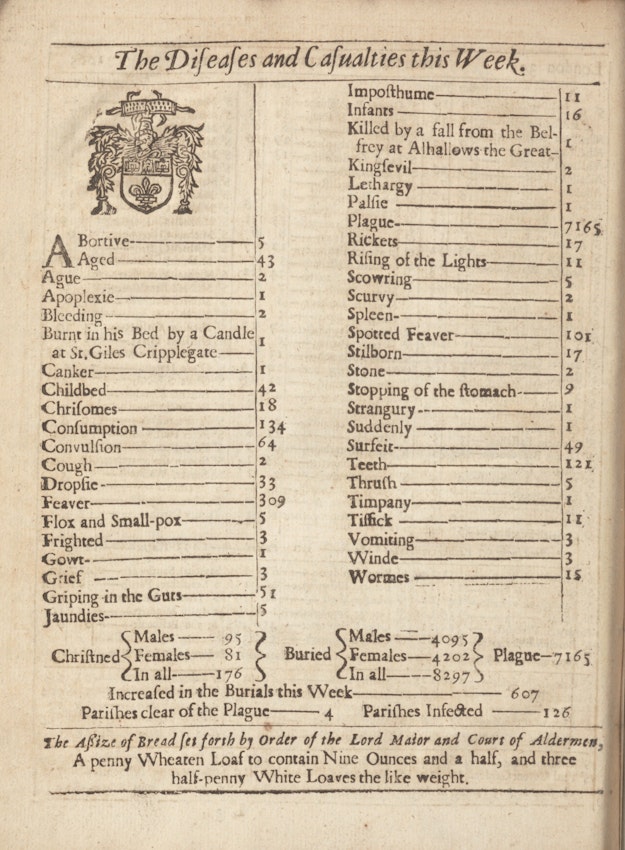
Recording was done by sextons and parish clerks and were then collected into Bills of Mortality. During this period they were published privately, by Ellen Cotes, who was very aware of their value to posterity. They were sold weekly for a penny. Thus the residents of London knew where the plague had spread. The causes of death intrigue us today. 'Rising of the lights' is any lung disease. I quite like 'suddenly' as a cause of death, being dead of suddenness seems almost merciful.
Not everybody was happy. John Graunt and others were very critical of the searchers of the dead. He claimed that they were open to bribery and that their searches were too cursory. Families could also be aggrieved if the findings embarrassed them or linked them to communicable diseases. Nevertheless this is the best look we have at death of that time, and of this peculiar social service that survived into the nineteenth century.
I wondered what it would be like being a searcher, taking to the gig economy later in life, figuring that your job would literally kill you, leaving ordinary society behind and having to carry a white wand wherever you went. I wondered if the women formed a sort of sisterhood, if they shared ideas and kept each other safe and maybe worked a kind of magic around death. Being set apart from society changes people. I thought the searchers might have that combination of marginality and special power that Shamans often have. They might be feared and respected both. They might have their own rituals for keeping safe and avoiding social opprobrium. They might have that form of immediate, in-house, lowbrow authority that comes from being the only person able to do a shitty, difficult thing.
With Shamanic journeying, you can go anywhere. I have written previously of a piece of necromancy where I journeyed to the Shaman of Bad Durrenberg, a historical person. I felt for the searchers of the dead because I too am a 'sober ancient woeman' in the precariat, and I have done some down and dirty jobs in my time. So I thought I would pay them a visit. My experience is entirely my own, and not to be seen as any piece of research. It has no empirical value. However, it is an example of how we can journey to ordinary people, our ancestors, or those who we feel an old kinship with.
What I got was not what I expected. It was a trip back in time, by firelight and lamplight. I met three women, who lived together. And no it was not a sisterhood, there was no hint of witchcraft or the mysterious about it. This was business. They explained about the ethics of what they did, and they did not see themselves as professionals in the way that we would today, or perhaps that John Graunt and those in authority expected of them. For them, the cause of death of an individual was a matter of observation and negotiation. The searchers worked within a social matrix of extended family and neighbourhood and parish. There was what happened that made a person die, and then there was what really happened, within this matrix. So of course they were bribed, in small ways, which helped their precarious finances immensely. Of course family members of the dead person had a say in how the cause of death was recorded; they knew best after all. This was not about diagnosis, but about negotiated truths. The skills the women had were all about sharp eyes and ears - and tact and sometimes keeping the mouth shut.
They said, if you ever come back, bring booze. Londoners, bless 'em.