Saturday, January 28, 2023

A VERY ROUGH GUIDE TO ECSTASY: WITH SOME CONTENT WARNING

He is suspended upside down by two hooks through his flesh, on a scaffold. Propelled into a trance state by pain and ritual, he calls to members of the crowd and divines for them, using Runes.

He is Tim Nancarrow, and he is a PhD student at the University of Newcastle researching the virtues of ritual sacrifice. The event was Midgardsblot 2022, an extreme Metal music and Heathenry festival in Norway. Here is their poster for 2023.  On their website, the cursor is in the shape of the Horns, which amuses me greatly. I wish I had been there!


https://youtu.be/BJvcBhIpALM 

is the address for The Nordic Mythology Podcast's interview with Tim, where he discusses his work in hook suspension and how this is a very visceral interpretation of the sacrifice of the Northern God Odin. Odin hung for nine nights on a windswept tree, with no food or drink, and sacrificed himself to himself, in order to bring us the Runes. Odin went hard, went to the utter limit in his search for wisdom, put his body literally on the line.

Earlier this year, talking of windswept, a young man is running at night. He has not slept for days. He's eaten as he's run. He's buggered, he thinks. He is Dean Stewart, aged 19, and he is running in the Revenant, Aotearoa/New Zealand's toughest adventure race. 

https://www.stuff.co.nz/sport/other-sports/131036862/toughest-adventure-race-crushes-all-entrants-again

This race takes place over 150 kms of Southland's roughest high country and only four people have ever finished it. Dean, the last competitor left from a field of forty........did not finish it.

Neither did Jean Beaumont, who I heard interviewed during her period of afterglow after the race, inarticulate with joy, relief and brain chemicals. And neither did Karl Watson, who gave up after a night of hallucinations caused by lack of sleep. And neither did Callum Wilkie, who thanked the organizer after he tapped out and said 'I'm really glad I found my limit'.

Limit experiences are one way of attaining ecstatic trance. Not all trance states are ecstatic. There is a trance state that is reflective and inward seeming. Simple Shamanic journeying is not ecstatic. The ecstatic state is more embodied, or at least more likely to involve the body. It is more likely to start with bodily sensations such as pain or heat or cold, and it is more like an upwelling of the senses to the point where the person leaves the body, or becomes greater than the body, or the body becomes greater. It is not always pleasurable either. Pain is an excellent entry point to the ecstatic trance.

Limit experiences are also well understood in the BDSM community. Here BDSM stands for Bondage, Discipline, Sadism and Masochism. I want here to describe particularly the state of the submissive partner in a Dominant/Submissive situation. Those who are successful Subs have discovered that pain and a temporary dismantling of the personality change their states of consciousness. By temporary dismantling of the personality I mean treatment that humiliates, confuses, torments a person to the point that their usual personality disappears. Then they enter a state called subspace, an altered state of consciousness where they experience a sense of dissolution, a lack of boundaries, and an exquisite vulnerability, openness and trust. When they are in that state, it is the responsibility of the Dom(me) to ensure their safety and re-integration. This aspect of BDSM play does not just mimic a Shamanic type of limit experience, it is that experience. It is as transformative as an ultra-marathon or a magical ritual in that all ecstatic work puts the body on the line. It is very much worth talking to people within the BDSM community; every one of them knows things about themselves that 'vanilla' people don't. And one of those things they know, is how to enter an ecstatic trance.

Hook suspensions, similar to the one described above, take place within the BDSM community and are treated with the moral seriousness and respect such rituals should afford. There is a cottage industry around setting them up and running them safely. It is the equivalent of an elite sport in the BDSM world. So I take Tim Nancarrow's attempt as not just a spectacle, but a genuine piece of magic with a somewhat ironic heritage, given that it is the BDSM community that are the wisdom keepers of what is essentially Shamanic knowledge. 

Then there is the mosh pit, that wonderfully primal source of ecstatic trance that is open to every Metal head, even me. I once used the group energy of a mosh pit to charge a sigil, throwing it into the crowd at a climactic moment. And last night I was lucky enough to attend a gig by seminal Norwegian Black Metal band Mayhem. Mayhem, and other Black Metal bands such as Wolves in the Throne Room, call their gigs rituals. I think this is an acknowledgement of the effects the music has. 

Honestly, after the first blast beat I am gone. I say I won't mosh, because I am 63 after all and have recently been diagnosed with osteoporosis, but I work my way through the crowd, and the black-clad young chaps are terribly helpful and soon I am up the very front, leaning over the rail at the front of the stage. The venue is tiny, dark and sweaty; it has been 29C today. The atmosphere is brilliantly charged. I am in the ecstatic trance state we all share, and this time I use it to chant the names of Runes I need. Thus it becomes a piece of ceremonial magic.

Mayhem are a longstanding jobbing band, and their original members, Hellhammer and Necrobutcher and Attila, are well into their fifties. They gave it heaps that night. It was a pure performance, in the way the drummer drums for the Shaman, the riggers build the scaffold and execute the hook suspension, and the supporters give time and skill to the race. 

And the Dom, or Domme, who takes complete control of the Sub and who is also completely responsible for their safety and welfare - what do they get out of it? The same as the musician or the drummer. Facilitating someone else's limit experience is an act of love and service. It looks glamorous and ego-filled, but properly done, it is the opposite. These curated and contained acts of transgression, by which I mean the literal meaning of crossing over, are happening in different ways all the time. Those who experience them are often otherwise ordinary people, and that is all to the good. The need to work in and around trance is being fulfilled, even when it is understood a bit differently. Where we have no religious language or space for it, we do it anyway. We need ecstatic trance. 

The photos below are of the Mayhem gig. The middle one, which is a bit blurry, is of Necrobutcher and Teloch checking their equipment in between sets. I have mad respect for Necrobutcher; he has seen some shit for sure.


Saturday, January 14, 2023

THE BLANKET AND THE BURIAL MOUND


This is my special blanket. It has the Elder Futhark Rune alphabet on it and these beautiful ravens, and a hood. It is double layered and has a fluffy lining.


Midsummer I was out in the middle of the night, undertaking a Northern practice called Utiseta, or sitting out. Traditionally, the magical practitioner sat on a burial mound overnight, although after the practice was discouraged by the church it took place just in secluded areas. It is a way of contacting the dead, or in my case divining through the Night. I once was told that every place is an urupa, the Maori word for cemetery. On every inch of the earth someone has died, so every part of the earth is worthy of attention. All places have spirit. So I can make my own place of power, or sit in an actual cemetery, whatever.


I will say little about the night, except that when I left the sitting place to go have a piss, the cloud cover dissolved momentarily and I saw a shooting star for only the third time in my life.


I was under a maple tree, and to get there and back I walked through a field of dry grass up to my hips. Of course I had my special blanket with me. I won’t do that again.


Afterwards, there was so much grass in the blanket. Over the following weeks I tried to pull out all the grass seeds. At first they were just annoying. My gorgeous blanket! After a while I began to have some respect for the grass and the seeds. Each seed was winged and barbed like a fantastic missile. Each seed burrowed its way into the blanket, to plant itself between the layers. Each seed needed to be individually pulled out, and boy did they resist me. And there were different grasses, I noticed over time. Some were burrowers, and they burrowed through the top layer of blanket. Some were nesters, and they tangled themselves within the fluffy bottom layer. Nesters and burrowers. Each seed has its way, had its purpose, its impetus to grow.


I am not great at detail and patience and perseverance, but if the seeds taught me anything it was those calm and underrated virtues. In the end, I washed the blanket and hung it, and stood and pulled and pulled and stroked and teased and pulled and detangled.


Grass just evolved that way. Natural selection has made grasses super successful. We humans have been creatures of steppe and plain. We like grass a lot. But also this:


Grass seeds have voices too. Seeds told me about need, and earth, and how to hide and grow in the hiding. Seeds made me patient and slow and focused. Seeds changed my state of consciousness.

Monday, September 12, 2022

DELIRIUM: A POEM ABOUT THE DEATH OF MY MOTHER


My mother died over ten years ago. I wish I knew then what I know now, about how dying humans exist for a while in both this world and the next, and how personal and exquisite it can be to die. All of what happened in the poem is true. I wanted to write something that balanced true events with the layers of complexity in our relationship. I have read lots of inspirational accounts of supporting the dying, and I wanted to write something that is determinedly not inspirational in that it is not resolved. A bit more like life, in other words. 

Delirium is the most common form of psychosis. It augurs poorly for length of life. Both my parents were delirious near their deaths, but there are strange truths here. Now, I would take a different and more generous interpretation. 

The rose is Dublin Bay. My mother named her roses after the people in her life. Dublin Bay was a favourite of hers. 

Here is the poem:


DELIRIUM


My mother

During happy hour at the hospice

Was reassuring me.

She had been kidnapped, and was held in a cabin in the woods.

Really,

A cabin.

In the woods.

But it was all OK. I was not to worry. There was a party.

The party was for her.

She could hear the clink of glasses and the laughter in the next room.

She could choose to join them. It was her party after all.

But not right now.


My mother

Ran away. They rang me, and said the Police were looking for her.

By this time she was so light, so insubstantial, she had skipped over the sensor mat and almost floated away.

They found her, some hours later,

Digging in someone’s garden.

Going to ground, digging in, seeking earth, I guess.

She told me, when I arrived,

He was a very nice policeman and he didn’t even molest her.


My mother

Tried to kill herself.

She took two Quetiapine and fell out of bed.

They rang me, and said it was not urgent, just to come when I could.

When I arrived, she said she had been very naughty,

But she had seen Jesus, and she had seen her husband.

What was she to do?


My mother

Sat on the floor, still agile, light and hollow-boned,

Examining the freckles on her leg.

She explained how each freckle was a person, how each freckle was an idea

Related to each other

A genogram

A map

A system

A galaxy of freckles.

I found it hard to cope with how my mother was rearranging her relationship with the universe.

I laughed a lot, nervously, not understanding.


My mother thanked me for coming this time.

She noticed the hard black diary I always carried, my time manager diary.

Oh, she said, I’m so glad you’re the Time Manager. You must be so clever, to manage Time the way you do.

So I’m Dr Who now, full noise, gate crashing the past and the future, squeezing through the tiny bit of present we still have, managing, it’s called, still managing.


My mother was rattling in her bed, greying out, her lungs spored and splayed, monstrous, bigger than she was, the disease bigger than she was.

They called me and said come now.

I said I have the day off tomorrow.

They said come now.

With a heart tenderised by the mallet of duty, I went.

The last reflexive breaths tore themselves from her as I arrived.

The nurse said, she must have heard you.

But she’d seen Jesus, and she had seen her husband, and what was she to do?

Sunday, May 29, 2022

RUNE WORK

'Well, I guess it's you', he says. He has been around the hall several times, looking for someone to give him a reading. He walked past the Tarot readers and the channellers and psychometry readers and has ended up at my stall. He is young, skinny, and he wants to know if he will go to prison. 

I explain what Runes are, and my process. I then rattle in four great helping spirits from the Upper World, facing each of the four quarters in turn. It's noisy in the hall. The wooden floors set up a bit of an echo and there are many others at work here. I have learned to let these great spirits help me enter a Shamanic state of consciousness so I can do my work. Then I take my box of Runes, and with eyes shut, I throw them onto a white linen cloth. I recite some words. Eyes still shut, I pick out three Runes and put them aside. They represent the Norns, the weavers of fate. They are what has become, what is becoming and what will become. Then I interpret them. I tell stories from Norse mythology to illustrate the learnings. I aim to educate as well as inform. 

This young man has not really owned up to what he has done. It was all someone else's fault and all a misunderstanding. He is chronically misunderstood, especially by his girlfriends. Nothing is fair. He thinks if he goes away this time, it will be because the judge will listen to the girlfriend, who is now his ex. I need to be a bit gentle here. The fact that he has come to me indicates he is ready to do some thinking. I unpack the reading carefully, bearing in mind what one of the helping spirits has told me when I was rattling. This chap has an opportunity here, and his ancestors are cheering him on. He can break a cycle, but his motivation is so tender and new it needs to be handled carefully. I am very positive. This is no time for bluff and bullshit. I am not interested in his excuses. I have a chance to tell him something of what he can become, what the helping spirits who claim him see in him. 

Divination is the second most common Shamanic activity, after healing. I trained in 16 forms of divination, but then I settled on something I was already doing. That was Rune work. I have been working with runes for about nine years now.

Runes are an alphabet. You can write your name in runes. As an alphabet they possibly arose in Etruscan culture and made their way north and west into the Germanic and Nordic lands. The word rune means a secret or a whisper. It seems runes were used not for writing larger texts, but for labels or statements such as naming the maker of a sword, or a blessing on a headstone. Or a spell. It was only in the twentieth century that they became used for divination, and the methods of their use is heavily influenced by more widely known systems such as Tarot or New Age oracle cards. They are well known in the Heathen community, but not so much outside of it. I have done rune readings regularly at spiritual fairs, and most of my querents have never heard of them. I like this. It means the people who come to me are willing to do something different. I am sometimes surprised at the results. They are taking a punt, and so am I because I am willing to stake my reputation on something unusual.

I am on my second set. My first set I made from plum tree wood, the second from apple wood. I etched the wooden discs with a pyrography tool, on both sides.As I did so I sang the Runes and listened to music that featured them. I also took a square piece of white linen, and hemmed it by hand, singing the Runes into it. Then I undertook a ritual for Odin, the god who found the Runes when he sacrificed himself to himself by hanging for nine nights on the World Tree Yggdrasil. Then I undertook a ritual for Freyja, the goddess who taught Odin how to use them. In this double ritual I washed the Rune discs in a mix of red ochre, consecrated water, rye, whisky and blood. I dedicated the Runes to the deities. I overdid the ochre a bit so I ended up painting over the pyrography. So it is a serious piece of kit. They live with their linen cloth in an antique cigar box. If I lost one, I would have to start again. It is the dedication of the Runes to the deities that is the most delicate part of the process. It needs to be renewed often enough. I need to be reminded of who I work with and to thank them.

A simple rune-of-the-day ritual keeps my hand in and reminds me about them. Because runes are such simple forms, I can see them everywhere. I once did a very elaborate ritual around the rune Eiwaz, which took about three months. During that time I put the rune everywhere, in twigs or stones or clothes pegs, and yet it remained invisible. You can draw runes in the air or on a surface, with a liquid. You can combine them into bindrunes and use them as amulets. You can sing them. You can make your body into their shapes (rune yoga). They are so simple they can be embedded into a daily practice. Unlike Tarot say, there are so few of them that they are each made to do a lot of duty. Working with them is a condensed and intuitive process, less amenable to the intellect. 

I am happy to do readings for people. Rune of the Day is free, for anyone. More detailed readings, or consecrated bind Runes, are done at the fairs for money, or for koha, or an appropriate gift. Cabbages are always good.


Friday, April 22, 2022

WHAT THE TREES TOLD ME: PART TWO

Middle World journeys are common and often unbidden. Daydreams and peak experiences can have a journeying element. They can be surprising, and even a risky because the spirits we meet in the Middle World don't know us and aren't necessarily our friends. And why should they be? We often aren't all that friendly and respectful to them. We often don't give back. 

A very simple method of Speaking to the spirits of nature is to walk in nature, come across a being like a tree or rock and ask respectfully for a message. Then open yourself up, and wait. 

You can also enter a Shamanic state of consciousness by rattling or drumming or whatever it is you use, and then walk out and come across a being and Speak with them. 

Here is a poem I wrote directly after doing this. It is a slight attempt at older poetic forms, where in this case the last sound of the first line rhymes with the first line of the second. Old Norse poetry is remarkable like this; they do a lot with a few words. English is a huge language and has a lot of words. This is because it is the confluence of many languages. When we write creatively we have many words to choose from. We can say field, meadow, pasture for example. In most other languages, the vocabulary is smaller and they do more with the words they have. Norse poetry uses many different alliterations and rhymes and stresses on words to express and change meaning. It also uses kennings, which are shorthand poetic descriptions. For example, the sea might be the whales' road. If you want to write real Norse poetry here is a good place to start:

http://viking.archeurope.info/index.php?page=old-norse-poetic-metre

Here is the poem, and as I said it is a direct insight, from the trees themselves. It is good to write directly after an experience. We are explorers after all, and explorers take good notes. 

 Five trees grow from one who died
Abide in loving unity
Family dig deep
Sleep not for knowledge gained
Pain for love of Yggdrasil

Yggdrasil is the Axis Mundi or World Tree in the Norse spiritual view. Nine worlds come off it, and beings abound in it. There is a squirrel called Ratatoskr who runs up and down it, carrying trash talk between the eagle at the top and the dragon at the bottom, as well as general gossip. I think I am like Ratatoskr as I move up and down my own Axis Mundi.

Image result for images pine trees australia


Friday, April 15, 2022

WHAT THE TREES TOLD ME: PART ONE

I have been sitting out in the forest at night. There is a place where I can see the Milky Way from the edge of the trees, and the rocky faces of the hills as the light fades, and I think it can't get any darker, and then it does. 

An ecotone is the term for a place that is on the edge of two ecosystems. An example might be where taiga meets steppe. At the ecotone, there are features of both taiga and steppe, and also new features. There might be a marshland, for example. There can be a mixing of climates, like an alpine climate where a cold wind drops into the plains, and warms with the land. Ecotones are dynamic places humanwise as well. Taiga people meet steppe people, and there is an exchange of culture and economy and language and genes. Anthropologists like ecotones as much as biologists do. 

Where I go to sit out, I have my own miniature ecotone, which is why I can see the stars from the edge of the trees.These trees are not native; they are mostly pine trees, flanked by ferns and blackberry. I have come to terms with pine trees, as long as it is not monoculture. They give me pine cones, and I remember Cernunnos, that boreal being, stag shaman, shapeshifter, animal charmer. All these forests are his, even at the other end of the world. I use an old Chaos magic banishing ritual and hallow the space, and Speak to the land spirits. I make offerings to the great helping spirits who I work with. I sit down and wait to be astounded. I am lucky that so far it has been a place of rich insight. 

On the way back there are always further wonders and marvels. The trip to and from a place like this is always important. We are best to develop a working attitude as we approach such a place. As we leave, we are best to travel lightly and slowly as we reflect. One of the wonders is a group of ti kouka, or cabbage trees. I have always liked them. They, like me, are creatures of the margins, of river bank and forest edge, of ecotone. They are common and often overlooked. Their leaves make great fire starters, but the trunks are so impervious to fire they were once used as chimneys. In a light wind, they rustle their long dry leaves, clever and sardonic. I can imagine a behind-the-hand commentary. The picture here is of ti kouka by a river; these are not the ones in question, but trees are the most joined-up creatures around.

We know now that trees recognize kin, that they nurture each other and they send and receive resources according to need. When the ti kouka Speak to me, on a night in the forest, others affirm what they say days later. 

This silvery and fantastic night, they seemed like important people, courtiers or grandees, nodding to me in acknowledgement and and rustling drily. There were seven of them, each as wise as the others. I asked them if they had something to tell me. They were deeply aggrieved. They were very clear that nice rituals and 'thoughts and prayers' are meaningless now. No, they don't want offerings or consciousness raising. They want action. There is sickness all around them and things that look fine are actually in trouble. Humans need to be on the streets and in the halls of legislature. It all needs to stop, now. 

So I felt pretty chastened and since then the grief and confusion of the times we live in have become more acute for me. The trees are right of course. The shit is getting way too real.


Tuesday, April 5, 2022

DREADFUL VISITATIONS: ANCIENT WOMEN WHO SEARCHED THE DEAD

Combining my interests in death, and walking in the worlds of the dead, I bring you some Dreadful Visitations. 

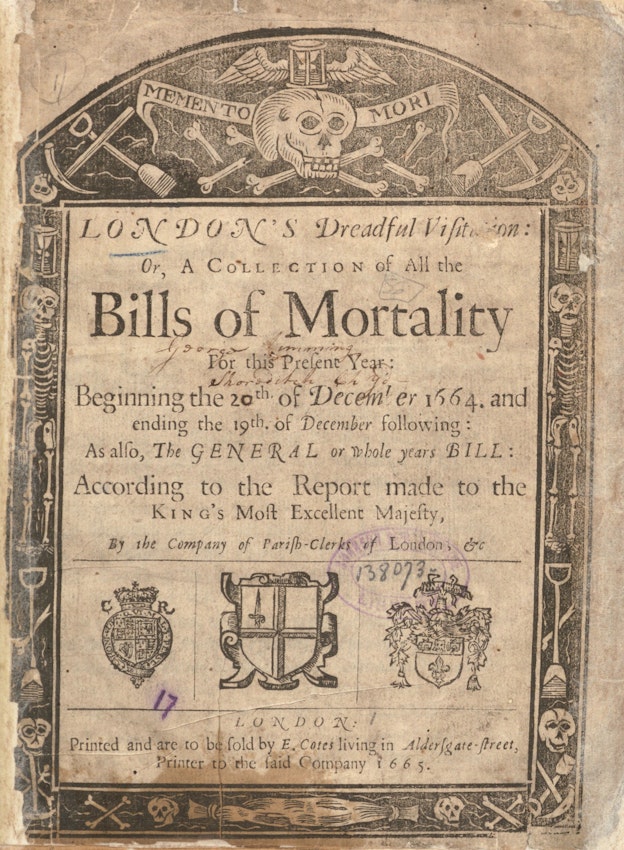
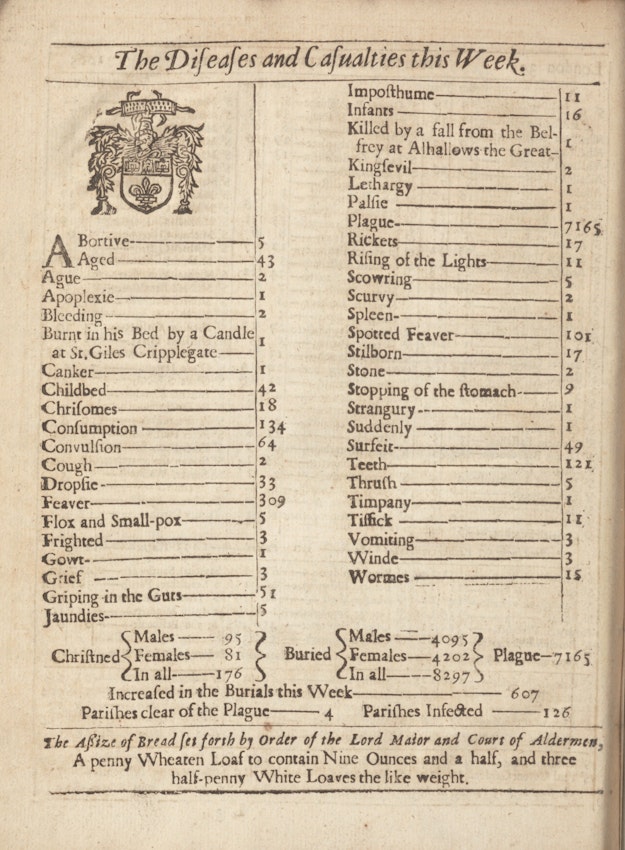
Below is the rather gorgeous front page of the Bills of Mortality from 1664-1665 in London, during the plague. Plagues are a bit topical nowadays and we can learn from how they have been handled in the past. We forget that the plagues of Europe killed a large proportion of the population and changed the demographic and economic landscapes for ever. And they went for centuries. 

In London, they tried to count the dead and work out what they had died from. This was a first attempt at statistics keeping, demographics, and epidemiology. We know about it from contemporary accounts by wealthy and literate men such as diarist Samuel Pepys, and the person in charge of it, John Graunt who is considered to be the 'father' of statistics. Daniel Defoe, in his excellent book Journal of the Plague Year, critiques the statistics keeping of the time; he wrote a generation later and his book is a fictionalized account, but illuminating nevertheless. 

So much for the wealthy and literate men. I am much more interested in the people who did the work on the ground. They were called Searchers of the Dead, or just Searchers, and they were women and they were poor. In once place they are described as 'ancient sober woemen' (sic). They were often ex midwives or carers for the sick, who were driven to change their employment as the circumstances changed around them. They were paid per body, which meant their incomes varied a lot. They had no training. They were subject to strict rules: they were not allowed to take up other employment, they had to live away from other people (usually they lived together), and they had to carry a white wand to indicate the nature of their work. A form of social distancing. Their lives were often short, due to their older age and the fact that they often died of the diseases they found.

We know the names of some of them. Mary Oswell and Elizabeth Scott of the Stepney parish took up the roles in 1625. Within two years both were dead. Goodwife Pattison worked for St. Antholin, Budge Row, from 1590-91 to 1597-98, alongside others like Mother Bamford, Goodwife Tailor, Goodwife Atkinson, and Goodwife Hubble. Goodwife, or Goody, was a title of respect used for working class women at the time. I am glad we know their names. 

Recording was done by sextons and parish clerks and were then collected into Bills of Mortality. During this period they were published privately, by Ellen Cotes, who was very aware of their value to posterity. They were sold weekly for a penny. Thus the residents of London knew where the plague had spread. The causes of death intrigue us today. 'Rising of the lights' is any lung disease. I quite like 'suddenly' as a cause of death, being dead of suddenness seems almost merciful.

Not everybody was happy. John Graunt and others were very critical of the searchers of the dead. He claimed that they were open to bribery and that their searches were too cursory. Families could also be aggrieved if the findings embarrassed them or linked them to communicable diseases. Nevertheless this is the best look we have at death of that time, and of this peculiar social service that survived into the nineteenth century.

I wondered what it would be like being a searcher, taking to the gig economy later in life, figuring that your job would literally kill you, leaving ordinary society behind and having to carry a white wand  wherever you went. I wondered if the women formed a sort of sisterhood, if they shared ideas and kept each other safe and maybe worked a kind of magic around death. Being set apart from society changes people. I thought the searchers might have that combination of marginality and special power that Shamans often have. They might be feared and respected both. They might have their own rituals for keeping safe and avoiding social opprobrium. They might have that form of immediate, in-house, lowbrow authority that comes from being the only person able to do a shitty, difficult thing.

With Shamanic journeying, you can go anywhere. I have written previously of a piece of necromancy where I journeyed to the Shaman of Bad Durrenberg, a historical person. I felt for the searchers of the dead because I too am a 'sober ancient woeman' in the precariat, and I have done some down and dirty jobs in my time. So I thought I would pay them a visit. My experience is entirely my own, and not to be seen as any piece of research. It has no empirical value. However, it is an example of how we can journey to ordinary people, our ancestors, or those who we feel an old kinship with.

What I got was not what I expected. It was a trip back in time, by firelight and lamplight. I met three women, who lived together. And no it was not a sisterhood, there was no hint of witchcraft or the mysterious about it. This was business. They explained about the ethics of what they did, and they did not see themselves as professionals in the way that we would today, or perhaps that John Graunt and those in authority expected of them. For them, the cause of death of an individual was a matter of observation and negotiation. The searchers worked within a social matrix of extended family and neighbourhood and parish. There was what happened that made a person die, and then there was what really happened, within this matrix. So of course they were bribed, in small ways, which helped their precarious finances immensely. Of course family members of the dead person had a say in how the cause of death was recorded; they knew best after all. This was not about diagnosis, but about negotiated truths. The skills the women had were all about sharp eyes and ears - and tact and sometimes keeping the mouth shut. 

They said, if you ever come back, bring booze. Londoners, bless 'em.


https://the-public-domain-review.imgix.net/collections/londons-dreadful-visitation-bills-of-mortality/plague-title-page-small.jpg?fit=max&w=1200&h=850

Bill of mortality london plague

IS THE WORLD REAL AND DOES IT MATTER?

Yes. End of episode. Thank you for reading.   No? The world isn’t real? We are not real? We are just spirits having a human experience...