Friday, April 22, 2022

WHAT THE TREES TOLD ME: PART TWO

Middle World journeys are common and often unbidden. Daydreams and peak experiences can have a journeying element. They can be surprising, and even a risky because the spirits we meet in the Middle World don't know us and aren't necessarily our friends. And why should they be? We often aren't all that friendly and respectful to them. We often don't give back. 

A very simple method of Speaking to the spirits of nature is to walk in nature, come across a being like a tree or rock and ask respectfully for a message. Then open yourself up, and wait. 

You can also enter a Shamanic state of consciousness by rattling or drumming or whatever it is you use, and then walk out and come across a being and Speak with them. 

Here is a poem I wrote directly after doing this. It is a slight attempt at older poetic forms, where in this case the last sound of the first line rhymes with the first line of the second. Old Norse poetry is remarkable like this; they do a lot with a few words. English is a huge language and has a lot of words. This is because it is the confluence of many languages. When we write creatively we have many words to choose from. We can say field, meadow, pasture for example. In most other languages, the vocabulary is smaller and they do more with the words they have. Norse poetry uses many different alliterations and rhymes and stresses on words to express and change meaning. It also uses kennings, which are shorthand poetic descriptions. For example, the sea might be the whales' road. If you want to write real Norse poetry here is a good place to start:

http://viking.archeurope.info/index.php?page=old-norse-poetic-metre

Here is the poem, and as I said it is a direct insight, from the trees themselves. It is good to write directly after an experience. We are explorers after all, and explorers take good notes. 

 Five trees grow from one who died
Abide in loving unity
Family dig deep
Sleep not for knowledge gained
Pain for love of Yggdrasil

Yggdrasil is the Axis Mundi or World Tree in the Norse spiritual view. Nine worlds come off it, and beings abound in it. There is a squirrel called Ratatoskr who runs up and down it, carrying trash talk between the eagle at the top and the dragon at the bottom, as well as general gossip. I think I am like Ratatoskr as I move up and down my own Axis Mundi.

Image result for images pine trees australia


Friday, April 15, 2022

WHAT THE TREES TOLD ME: PART ONE

I have been sitting out in the forest at night. There is a place where I can see the Milky Way from the edge of the trees, and the rocky faces of the hills as the light fades, and I think it can't get any darker, and then it does. 

An ecotone is the term for a place that is on the edge of two ecosystems. An example might be where taiga meets steppe. At the ecotone, there are features of both taiga and steppe, and also new features. There might be a marshland, for example. There can be a mixing of climates, like an alpine climate where a cold wind drops into the plains, and warms with the land. Ecotones are dynamic places humanwise as well. Taiga people meet steppe people, and there is an exchange of culture and economy and language and genes. Anthropologists like ecotones as much as biologists do. 

Where I go to sit out, I have my own miniature ecotone, which is why I can see the stars from the edge of the trees.These trees are not native; they are mostly pine trees, flanked by ferns and blackberry. I have come to terms with pine trees, as long as it is not monoculture. They give me pine cones, and I remember Cernunnos, that boreal being, stag shaman, shapeshifter, animal charmer. All these forests are his, even at the other end of the world. I use an old Chaos magic banishing ritual and hallow the space, and Speak to the land spirits. I make offerings to the great helping spirits who I work with. I sit down and wait to be astounded. I am lucky that so far it has been a place of rich insight. 

On the way back there are always further wonders and marvels. The trip to and from a place like this is always important. We are best to develop a working attitude as we approach such a place. As we leave, we are best to travel lightly and slowly as we reflect. One of the wonders is a group of ti kouka, or cabbage trees. I have always liked them. They, like me, are creatures of the margins, of river bank and forest edge, of ecotone. They are common and often overlooked. Their leaves make great fire starters, but the trunks are so impervious to fire they were once used as chimneys. In a light wind, they rustle their long dry leaves, clever and sardonic. I can imagine a behind-the-hand commentary. The picture here is of ti kouka by a river; these are not the ones in question, but trees are the most joined-up creatures around.

We know now that trees recognize kin, that they nurture each other and they send and receive resources according to need. When the ti kouka Speak to me, on a night in the forest, others affirm what they say days later. 

This silvery and fantastic night, they seemed like important people, courtiers or grandees, nodding to me in acknowledgement and and rustling drily. There were seven of them, each as wise as the others. I asked them if they had something to tell me. They were deeply aggrieved. They were very clear that nice rituals and 'thoughts and prayers' are meaningless now. No, they don't want offerings or consciousness raising. They want action. There is sickness all around them and things that look fine are actually in trouble. Humans need to be on the streets and in the halls of legislature. It all needs to stop, now. 

So I felt pretty chastened and since then the grief and confusion of the times we live in have become more acute for me. The trees are right of course. The shit is getting way too real.


Tuesday, April 5, 2022

DREADFUL VISITATIONS: ANCIENT WOMEN WHO SEARCHED THE DEAD

Combining my interests in death, and walking in the worlds of the dead, I bring you some Dreadful Visitations. 

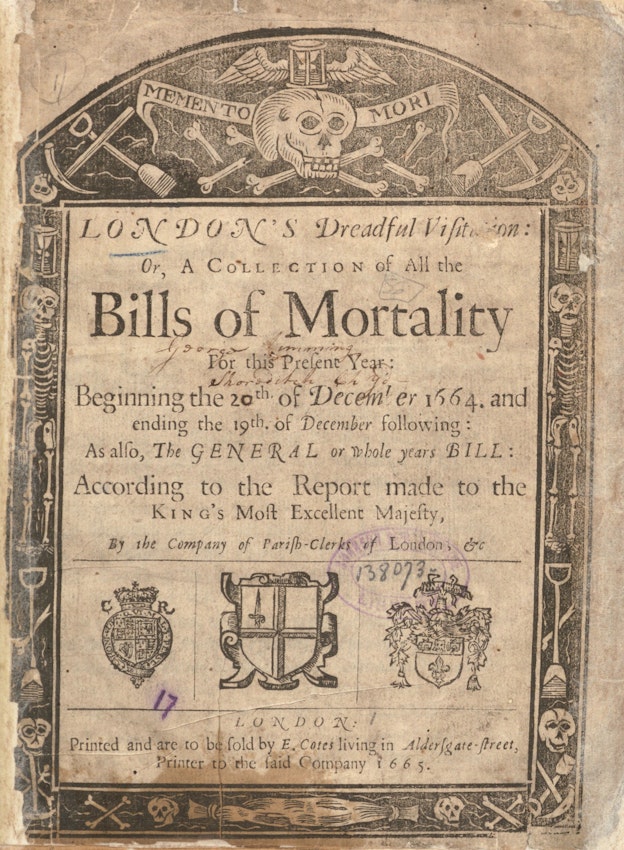
Below is the rather gorgeous front page of the Bills of Mortality from 1664-1665 in London, during the plague. Plagues are a bit topical nowadays and we can learn from how they have been handled in the past. We forget that the plagues of Europe killed a large proportion of the population and changed the demographic and economic landscapes for ever. And they went for centuries. 

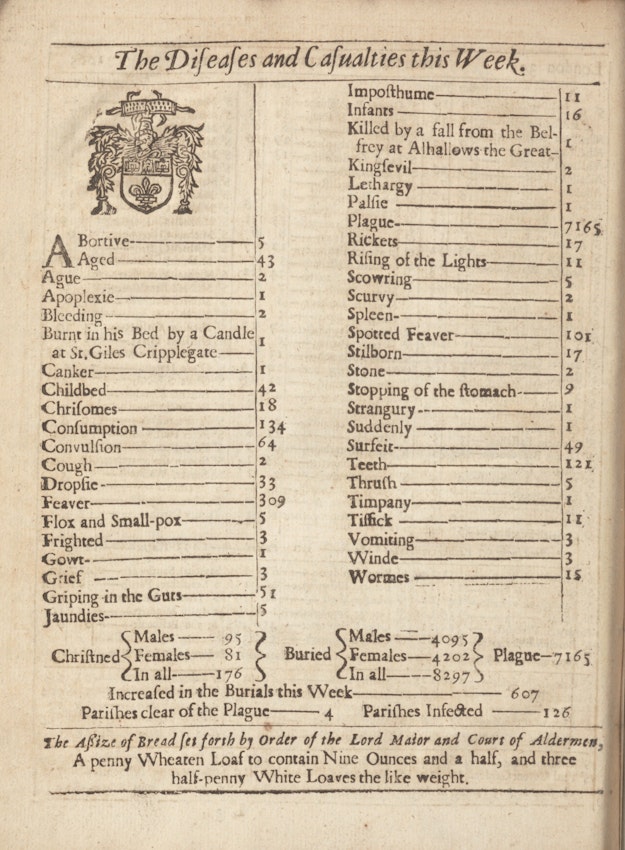
In London, they tried to count the dead and work out what they had died from. This was a first attempt at statistics keeping, demographics, and epidemiology. We know about it from contemporary accounts by wealthy and literate men such as diarist Samuel Pepys, and the person in charge of it, John Graunt who is considered to be the 'father' of statistics. Daniel Defoe, in his excellent book Journal of the Plague Year, critiques the statistics keeping of the time; he wrote a generation later and his book is a fictionalized account, but illuminating nevertheless. 

So much for the wealthy and literate men. I am much more interested in the people who did the work on the ground. They were called Searchers of the Dead, or just Searchers, and they were women and they were poor. In once place they are described as 'ancient sober woemen' (sic). They were often ex midwives or carers for the sick, who were driven to change their employment as the circumstances changed around them. They were paid per body, which meant their incomes varied a lot. They had no training. They were subject to strict rules: they were not allowed to take up other employment, they had to live away from other people (usually they lived together), and they had to carry a white wand to indicate the nature of their work. A form of social distancing. Their lives were often short, due to their older age and the fact that they often died of the diseases they found.

We know the names of some of them. Mary Oswell and Elizabeth Scott of the Stepney parish took up the roles in 1625. Within two years both were dead. Goodwife Pattison worked for St. Antholin, Budge Row, from 1590-91 to 1597-98, alongside others like Mother Bamford, Goodwife Tailor, Goodwife Atkinson, and Goodwife Hubble. Goodwife, or Goody, was a title of respect used for working class women at the time. I am glad we know their names. 

Recording was done by sextons and parish clerks and were then collected into Bills of Mortality. During this period they were published privately, by Ellen Cotes, who was very aware of their value to posterity. They were sold weekly for a penny. Thus the residents of London knew where the plague had spread. The causes of death intrigue us today. 'Rising of the lights' is any lung disease. I quite like 'suddenly' as a cause of death, being dead of suddenness seems almost merciful.

Not everybody was happy. John Graunt and others were very critical of the searchers of the dead. He claimed that they were open to bribery and that their searches were too cursory. Families could also be aggrieved if the findings embarrassed them or linked them to communicable diseases. Nevertheless this is the best look we have at death of that time, and of this peculiar social service that survived into the nineteenth century.

I wondered what it would be like being a searcher, taking to the gig economy later in life, figuring that your job would literally kill you, leaving ordinary society behind and having to carry a white wand  wherever you went. I wondered if the women formed a sort of sisterhood, if they shared ideas and kept each other safe and maybe worked a kind of magic around death. Being set apart from society changes people. I thought the searchers might have that combination of marginality and special power that Shamans often have. They might be feared and respected both. They might have their own rituals for keeping safe and avoiding social opprobrium. They might have that form of immediate, in-house, lowbrow authority that comes from being the only person able to do a shitty, difficult thing.

With Shamanic journeying, you can go anywhere. I have written previously of a piece of necromancy where I journeyed to the Shaman of Bad Durrenberg, a historical person. I felt for the searchers of the dead because I too am a 'sober ancient woeman' in the precariat, and I have done some down and dirty jobs in my time. So I thought I would pay them a visit. My experience is entirely my own, and not to be seen as any piece of research. It has no empirical value. However, it is an example of how we can journey to ordinary people, our ancestors, or those who we feel an old kinship with.

What I got was not what I expected. It was a trip back in time, by firelight and lamplight. I met three women, who lived together. And no it was not a sisterhood, there was no hint of witchcraft or the mysterious about it. This was business. They explained about the ethics of what they did, and they did not see themselves as professionals in the way that we would today, or perhaps that John Graunt and those in authority expected of them. For them, the cause of death of an individual was a matter of observation and negotiation. The searchers worked within a social matrix of extended family and neighbourhood and parish. There was what happened that made a person die, and then there was what really happened, within this matrix. So of course they were bribed, in small ways, which helped their precarious finances immensely. Of course family members of the dead person had a say in how the cause of death was recorded; they knew best after all. This was not about diagnosis, but about negotiated truths. The skills the women had were all about sharp eyes and ears - and tact and sometimes keeping the mouth shut. 

They said, if you ever come back, bring booze. Londoners, bless 'em.


https://the-public-domain-review.imgix.net/collections/londons-dreadful-visitation-bills-of-mortality/plague-title-page-small.jpg?fit=max&w=1200&h=850

Bill of mortality london plague

Thursday, March 24, 2022

STRETCHING LANGUAGE INTO AN ANIMATE WORLD


Gerard Manley Hopkins in his poem 'Pied Beauty' starts 'Glory be to God for dappled things' - things counter, original spare, strange. Hopkins was that most rarefied and terrible of spiritual creatures, a Jesuit priest, an unusually sensitive soul, genuinely tortured by several forbidden desires, physically frail, and crashingly depressed. When I read him in my youth, I was uplifted by his joyous feel for the world around him, and the way he stretched language so it sang all by itself. I did not know about how different a soul he was, or how cruel his life. 
 
Hopkins played fast and loose with language even outside of poetry, and he had his own term for the specific essence of things. He called it 'inscape'. What I find valuable here is the idea that we experience inscape through specificity, and through the senses. The inscape of a tulip is experienced by appreciating its characteristics, such as the delicacy of its petals: that tulip, those petals. God makes everything unique. The experience of this is called instress, and our own experience is as unique as the thing we are experiencing. Thus, non-ordinary reality is immediate, here and now, and not an abstract thing at all. Hopkins, tragically for him, was wedded to God and his truly dire attempts to vanish into the approval of a fearsome deity juxtapose with this delicate specificity when it comes to experience and the world of nature. Here is that juxtaposition in 'The Starlight Night'. His animist soul is naturally uplifted, as if by the sudden discovery of a glorious peopled reality,  but then he must be drawn away to contemplate the religious life before reaching a temporary equilibrium.

  • The Starlight Night

  • Look at the stars! look, look up at the skies!
  • O look at all the fire-folk sitting in the air!
  • The bright boroughs, the circle-citadels there!
  • Down in dim woods the diamond delves! the elves’-eyes!
  • The grey lawns cold where gold, where quickgold lies!
  • Wind-beat whitebeam! airy abeles set on a flare!
  • Flake-doves sent floating forth at a farmyard scare!—
  • Ah well! it is all a purchase, all is a prize.


  • Buy then! bid then!—What?—Prayer, patience, alms, vows.
  • Look, look: a May-mess, like on orchard boughs!
  • Look! March-bloom, like on mealed-with-yellow sallows!
  • These are indeed the barn; withindoors house
  • The shocks.   This piece-bright paling shuts the spouse
  • Christ home, Christ and his mother and all his hallows.
 
How fortunate I am to have fewer spiritual inhibitions. My inhibitions are all my own, in fact.
 
 I think the animistic world view lends itself to a kind of panentheism, where we experience the divine as entangled in the world. The world is not divine, nor is it separate from the divine. It is imperfectly manifest. When we feel we are one with it, as we sometimes do when we explore it in a Shamanic state of consciousness. that does not make us perfect or even wise. It is more that this is a natural state, from whence we begin. The beginning is thus with our relationship with the world, this entanglement with the world. It is outside us as well as inside us. Working with a world outside of us helps ground us, literally. No, I don't make all my own reality, as the new agers and the chaotes think.
 
Dappled light is my favourite. It moves all the time, stochastic. It is best seen sideways, like the small beings who move in it. There, I can feel the different paces of light, from the shuttle of sunlight between leaves, to the lengthening of shadows, to the slow source of the sun. I have taken to giving homely offerings to forests on my walks. The light returns the gift over and over.


Wednesday, March 9, 2022

THE DOOR OF PERCEPTION

Do you go through, or do you go around? 


I was walking in a forest and I came across this door. As you can see it was right in the path, and it had this picture on it of Thing One throwing away a key. It took up only a little of the path, and there were signs that people had gone through it, and gone around it, although presumably not at the same time.
 

A door is always magical. A door is a cause for a pause. You can't go through a door without a shift in consciousness, even if it is too slight to be noticeable in the business of the day. A door is always a portal, and if induction is as impoverished as Hume says it is, you never really know what is on the other side, even if you have been through it a thousand times.

It is no wonder that the door is such a potent magical symbol. Doors lead us to other realms, Narnia or secret gardens or whole other realities. There are forbidden doors in castles. Open the door and you will never be the same again. Behind the door is always knowledge, whether you want it or not. Entheogens may open psychic doors for us, as may meditation or autonomic driving such as drumming. In songs there is a door to your heart, and maybe even a key. New feelings may live behind that particular door.
 
When I came to the door in the forest, I could have walked around it without breaking stride. Many others had done so. What do you think I did?  I turned the door knob, of course, and walked through. And the forest laid itself before me, and I walked for three hours in it, and there were rocks and a stream and honeydew on the black beech trunks, and sunshine and shade, and it was good. 


Thursday, March 3, 2022

ON MICROGREENS, THE GARDENS OF ADONIS, AND BEING TOO BEAUTIFUL TO LIVE

I have been pretending to garden. I am not by nature a gardener. I am suspicious of gardening, as it hints to me of bourgeois Victorian positivism. Weed that soil! Trim those edges! Match those colours! My ancestors were the worst types of colonialists. See a tree? Cut it down! See a baby seal? Well, even my great grandfather couldn't cope with that one. So I am convinced after generations of unsuitable mangling of the land in order to turn it into some weird green and pink simulacrum of the ghost of England, that Gaia does not garden and neither do I. I do have a yard with some plants and I am beginning to develop a feel for them. Most of what I plant is edible, or native, or friendly to bees. I have 15 different edible things. But it is not gardening as such. Nothing in rows, nothing really pruned, no annuals, no peasants falling in the haha. (Ha ha!)


I have been helping microgreens to grow. These are Amaranth Red Garnet. I was very excited by them. The instructions were to sprinkle the seeds in the soil and cover them, and wait for three days. I was peeking at them an hour after I had watered them. I knew they would not have sprouted yet but it was all too exciting. They duly sprouted and now they are this vivid dark pink, too bright to be real I sprinkle a libation of water on them in the morning and I carry them around the house. Too pretty for the kitchen, they grace my room at times as I pay them daily homage. 

In classical Athens, women celebrated Adonia, or the festival of the death of Adonis. Adonis in myth was a beautiful young man who was the lover of several deities, and who came to a sad end being gored to death by a boar. Adonia was not an official (read:civic, public, respectable. Read: male)  festival, and it was celebrated by only women, and all women included the disreputable. Women planted quick-growing grains and vegetables in shards of broken pottery, The plants sprouted, then were left to wilt in the sun, and died. The women of Athens then repaired to the roofs of their houses to weep and mourn the brief beauty of Adonis and his gory death. And after that, they took to the streets. They carried their tiny dead gardens to the sea, and cast them in.

There is scholarly debate over the meanings of the gardens of Adonis. Sir James Frazer saw the ceremony as the standard death and rebirth vegetation rite. Anthropologists David Graeber and David Wengrow in their excellent book 'The Dawn of Everything' feel that the rites denoted pretend gardening, and I can relate to pretend gardening so I like their idea. They describe the backwards and forwards in and out of agriculture that many societies did over thousands of years - playful gardening or temporary gardening or pretend gardening was a way of tipping a cultural toe in agriculture without commitment. Other later scholars of mythology have considered the rite to be a great taking of the piss out of serious fertility ritual. These Athenian women mocked the death-and-rebirth-of-the-male-god rituals by doing something entirely playful and trivial. Maybe they also expressed communally the fragility of life and the power they as women had over it. If I can plant a flower and kill it, what else can I do? There is an incipient threat here.

The 'gardens of Adonis' became an expression to mean something trivial and temporary. Hang on a minute. Brief beauty, the fragility of youth, the thing that cannot take root, how death is a just a day in the sun away. These things are not trivial. Philosopher and economist Georges Bataille described something similar as 'the accursed share'. He was interested in luxury, in what people do with the time, energy and resources they have left over from necessary toil. The point of the accursed share is that it must be spent, in unproductive activity such as ritual, or non-reproductive sex, or spectacle. It must be spent on something you can't get back, you can't invest in. It is destined for waste. What we do with this luxury characterizes our societies. 

Related is Jacques Lacan's (and Zizek's)  idea of jouissance. Jouissance is enjoyment or pleasure beyond itself, or beyond the instinct for enjoyment. It is a form of enjoyment that is destabilizing, subversive and potentially destructive. For Lacan, jouissance is not just too much enjoyment. It is enjoyment that has tipped over into pain, or suffering. This kind of painful, rapturous, mystical enjoyment speaks to me of ritual, trance and merge.It is the state you get in the mosh pit at a metal gig, or a political protest, or in the throes of passion (passion meaning pain after all ) - all of which can be transgressive places.  It is not for nothing that the Shaman endures hours of dancing, days of fasting, and spiritual peril in order to attain the state where they can merge with their helping spirits and become more than human. Consider the hook suspension practices of the Plains Indian Shamans, where extreme pain is used to change consciousness. 

Mourning can also be ecstatic. I imagine the women of Athens on their rooftops, weeping for Adonis, a kind of over the top performative rapturous agonized weeping that is above all knowing. We know what we are about, we know the gods are watching us, we know we have left behind the necessities of toil and we are in this wildly overflowing state of emotional luxury. This is what we do with the accursed share. We know we are wasting it; that is the point. And the men don't get it and can't stop it, because rapture, passion and the pain of passion and rapture are not for them, at least not in public, at least not in Athens.

My microgreens are a waste. They are crazy beautiful. Their beauty is far greater than their usefulness although they do make a pretty garnish and they are probably quite rich in antioxidants or whatever. Short-lived, doomed, like Adonis, too beautiful to live. 

When I said they were too beautiful to eat someone said to me, why would you eat anything less beautiful? I got to thinking, what if we ate only beautiful things? What if eating was an act of jouissance, an aesthetic feast? If every meal was a psychological potlatch, a celebration of the desire to eat rather than the base need? I am imagining eating only the best food - not the most expensive or fashionable, but the best and most beautiful. One shining leaf of silver beet still wet with rain, or the three blushing blueberries that just came ripe this morning. As a good animist, what if I treated my food as if it were alive?

Saturday, February 19, 2022

I HAIL THE IMAGINAL - AND TRY TO ANSWER THE QUESTION OF WHY EVEN BOTHER WITH NON ORDINARY REALITY


 I was asked recently, why bother at all with Non Ordinary Reality? Ordinary Reality is wonderful. It is all we need. And it needs our help. 

I have muddled around with an answer. It is a good question, because it bypasses the obvious. The people I do Shamanic things with, understand about Non Ordinary Reality, but their understanding is not automatic. Many of us don't share it. Many of us are empiricists. They would state that is not just that NOR is not to be bothered with, but that it doesn't exist. 

Yes, OR is wonderful, or to be more explicit, the Middle World is wonderful. It includes all the things we think we know, all the deep lessons of science, all that we perceive with our senses. It is beautiful and terrible and subjective and real. And it does need our help; climate change catastrophe is upon us and to do anything at all about it we need a shared understanding and a will to act and that all has to be grounded in OR to mean anything. It is clearly not enough to float around in alternative realities grooving to the spacey vibes of the cosmos right now. 

So here are my arguments, and I admit their philosophical weaknesses. Shamanism, as a way of exploring NOR, is experiential and experimental rather than theoretical, so the theory is weak in comparison. Or maybe not weak so much as diverse, culturally informed, and personal. 

My first argument is from history. Of course arguments from history tend to have problems with the logic, but I think I can get away with this because there is so much history. I reiterate, for ninety percent of our human history we were animists. We saw the world as alive, people with non-human entities, and we were more naturally able to access this aliveness by experiencing NOR. I have written before about how animism has been normative, and how this aliveness gradually receded from our consciousness over the last thousand years or so, yet has remained just under the surface. 

For ninety percent of our history, we thought that NOR was real. 

I know that for some people the acknowledgement of empiricism has been liberating, but mostly what they mean by that is atheism. They have found it personally liberating to not have to believe in God any more, with all the baggage that entails. They are free from the psychological gymnastics they have to undertake to believe in things that they just can't, and from the guilt and fear and so on. These are important experiences, but they have nothing to do with the existence or otherwise of NOR. 

I have asked in groups, has anyone here ever experienced Non Ordinary Reality? A few tentative hands would go up. I would ask, really? Have you ever had a dream? Have you ever had a daydream? Have you ever taken alcohol or other drugs? Have you ever  had a mystical experience? Have you ever had a premonition or a Near Death Experience or seen a ghost or had any experience of the numinous? Almost all hands go up, and people nod and smile. NOR is not that hard to find. We all of us have the background for an exploration of NOR. Some of us wander around in it all the time, but without awareness or will or purpose.

The question then becomes, but is it real, or is it your imagination. Well, yes. See the paragraph above. Sigh. 

Holy the imagination. Holy the impulses of the brain. Holy the cave of the skull and the light that fills it. Holy the silky tide of spinal fluid, and the rainbow of chemicals, and the fire of electricity. Holy the physical heft of it - the surge of oxytocin, the hairs on the back of the neck rising, the hands uplifted. I cast my eyes to the hills, the real hills, and all of this happens in that holy cave of the my skull. Holy all of it. No less holy than angels is our experience of them. You may even say we make them holy. We sanctify the world and it sanctifies us right back. There may be nothing else. 

Having said all that, there is however an aspect of will when it comes to navigating in NOR. I think I can make a distinction between willed imagination and unbidden experience that is bigger than the usual state of consciousness. You will know the shift. You lie there thinking about journeying, propelling yourself around in your mind, asking yourself questions, willing 'something to happen'. Or you dance and dance and shake the rattle and drink a heap of vodka and you think you see something out of the corner of your eye, but in the end it is nothing, you are just making it up. Often it is like, I thought I experienced something, but I didn't. I was just making it up. Then you feel the shift, or something like taking off and leaving your will behind. Once you have left your will behind, the opportunity is there for helping spirits to come in and guide you. You are now tapped into power beyond yourself. You still have some will, in that you can make choices and ask questions and so on. But the more you are in there, the deeper the trance, the less will is possible. Working with will is a useful skill.

Henry Corbin, Islamic scholar, uses the word imaginal. Poet Gerard Manly Hopkins uses the word inscape. These are attempts to describe a state of enfolding realities within the human brain. I want to find a term that is not metaphor but not equivalence. I don't actually mind the resulting lacuna. No words work here, and yet we have written millions.

Now I need to address the other part of the question - that Ordinary Reality, by which I mean here the material world, needs our help. Help needs to be grounded in OR. 

Why we journey is traditionally to help in OR. Shamans journeyed to heal people, find scarce resources, and guide communities. I return to the example of Black Elk of the Lakota. Black Elk had a mysterious illness as a child and he lingered in a coma for many days. In that coma, he experienced a vision. Much later, when the Lakota were under existential threat from the white invaders, he spoke of his vision. It was a highly elaborate vision, and the people enacted it faithfully over several days, a whole community event. I can't imagine that happening in my society. For a start, nobody would trust a vision, or the person who had the vision, that much, and it they did it would be a worry because that person would probably be running a cult. There is little space for true community NOR vision in this world of cynicism and grift. But think of the possibility for genuine consultation and change. I can imagine it. Black Elk had proven himself in battle and daily life before he was able to tell his vision. His vision nearly cost him his life. He had to be worthy even to talk about it. His shamanic abilities needed to be tested and publicly acknowledged, and they were by no means infallible or beyond debate. I don't want to overstate this, but I can see the shamanic vision as a tool for community decision making and whole community involvement in rituals which then enhance the experiences of NOR for everyone. As I have said before, it is the job of the Shaman to turn into the crab or the bear or the ancestor, and it is our job to see the crab or the bear or the ancestor. NOR is for everyone.

In neo-Shamanism of various sorts, or Core Shamanism, journeying in NOR is used primarily for personal spiritual development. I have my serious doubts about the endless search for personal growth, or the endless growth, or the endless bloody endlessness of it all which can result in as much guilt and powerlessness as traditional religion. However, wise guidance from helping spirits you trust in the Upper or Lower Worlds is a good thing. It is a way of getting information and advice you would not otherwise have access to. It can also be healing and soothing and fun. The helping spirits I work with have very rudimentary senses of humour, for example. I am refreshed by their silliness. 

Working in NOR with an animistic framework can impart a respect and love for the natural world. You realize you are not just part of it, but entangled in it, in and out of different realities. Here is where the boundaries between realities become porous for us. The mountain is holy in all realities. It is holy because it has always been so. It is holy because it is beautiful and treacherous and clearly a person. It is holy because it is a keeper of secret wisdom. And so on. The shamanic view starts and ends with this world, the natural world, the real ordinary world, wherever it may go during the journey. 

None of this obliges us to do the right thing for the planet or be better people. We are still subject to ideology and cultural bias and our own psychological strengths and problems. I suppose I could give thanks to my Power Animals in a nature ritual and then go home and eat a huge steak packaged in a hundred years of plastic. I could doom myself to thoughts and prayers. Experiences in NOR need to feed back into OR. They are likely to sensitize us to the natural world, our actual world, and give us context and a bigger picture. Balanced with activism and a healthy ethical system good moral judgment, that is. 

------------------------------------------------------------------------------------------------------------

The photo is of  the entrance to Te Puna o Riuwaka, also known as the Riwaka Resurgence.


IS THE WORLD REAL AND DOES IT MATTER?

Yes. End of episode. Thank you for reading.   No? The world isn’t real? We are not real? We are just spirits having a human experience...